
Start to End of Slavery
By Miguel Esteban

Where it all began at ancient Sumer
Slavery roots came for a place known as ancient Sumer, which is located in what is present-day southern Iraq. The Sumerian civilization emerged approximately between 4000-4500 BC, flourishing due to their fertile land and abundant water supply source from the Tigris and Euphrates rivers, which enabled the creation of significant agricultural surpluses. in Addition, the Sumerians developed the first known writing system, Cuneiform, made around 3500 BC. An example of this early writing is a poem from "The Epic of Gilgamesh", which captures various Sumerian legends and myths. This ancient poem dates back to approximately 2100 BC but was rediscovered in the mid-19th century, primarily due to the extensive excavation of King Ashurbanipal's library in Nineveh in 1849. During this period, the Sumerians also began practicing slavery and medicine, and by around 2100 BCE, they had established a complex legal system that governed their society the Sumerians practice slavery to fix the social Stauds and to punish war prisoners to do difficult labor to stabilizes the economy. However, like all great civilizations throughout history, Sumer eventually fell. By 1900 BCE, the once-thriving Sumerian civilization fell due to a combination of detrimental factors such as soil salinization, significant environmental changes, prolonged drought, and internal conflicts among powerful city-states such as Umma, Lagash, Ur, Eridu, and Kish over the increasingly scarce fertile land.
How they became slaves & how they got their freedom in ancient times
Individuals became enslaved for a variety of complex reasons: they might have been forced to pay off debts by serving for a specific period, held a low status within the social hierarchy, captured during times of warfare, born to slavery by their enslaved mothers, or punished for crimes that they committed. Freedom for these individuals could be achieved through several different means. They might be freed by their owner’s consent, purchase their freedom by saving money over an extended period, or be freed through their owners will, which often given their freedom upon the owner’s eventual death. Additionally, a slave could earn their freedom through acts that were deemed worthy from the master. In some cases, slaves could gain freedom by serving at a temple, a practice primarily seen in ancient Greece, where they were sold to the temple for the remainder of their lives. And rarely, would the state would grant freedom, as exemplified by Athens, which liberated every slave who contributed to the significant victory at the Battle of Arginusae in 406 BCE. The image in the top corner depicts an ancient Egyptian carved stone relief, while the image in the bottom corner illustrates the vital agricultural labor that took place in ancient Egypt.


Slavery in Ancient China
Ancient China, established around 2000 BCE, was divided into 13 major dynasties, but totaling to 13, dynasties including the Xia, Shang, Zhou, Qin, Han, Sui, Tang, Song, Yuan, Ming, and Qing. These dynasties flourished due to their fertile river valleys, which offered reliable water source, nutrient-rich soil for extensive agriculture, and natural barriers that shielded them from invasions. Their early advancements in agriculture and technology, coupled with ruff political systems, rich cultural traditions, and active engagement in global trade, significantly contributed to their prosperity. However, over time, these dynasties began to decline, fell to a combination of internal weaknesses and external pressures for land. Slavery was a part of life in Ancient China from the era of the dynasties, mirroring systems found in other ancient civilizations. Individuals often became slaves by birth, through debt repayment, or as punishment for crimes. In severe cases, entire families could be sold into slavery due to the actions of one member. Male slaves were tasked with a variety of labor, including agricultural work, construction, state projects, palace duties, and servitude. Those who disobeyed their masters faced harsh punishments, including beatings or shackling. Female slaves, on the other hand, were primarily engaged in domestic labor. Tragically, some were forced into providing sexual services, particularly if they were young or attractive in their owners eyes. Noncompliance often resulted in severe physical punishment or sexual abuse.


slavery in Ancient Rome
Ancient Rome was founded in 753 BC by the legendary figures Romulus and Remus, with Romulus recognized as the first ruler of this remarkable civilization. Over the span of more than a millennium, Ancient Rome thrived, thanks to Romes military power, advanced engineering techniques, political adaptability, and extensive economic network. Throughout its long history, Ancient Rome underwent three significant phases: the Roman Kingdom, the Roman Republic, and ultimately, the Roman Empire. The Western Roman Empire fell in 476 AD, a decline attributed to a mix of internal weaknesses, economic troubles, military defeats, and relentless external invasions, culminating in the deposition of the last emperor that year. In contrast, the Eastern Roman Empire, commonly known as the Byzantine Empire, fell in 1453 AD due to internal political instability, economic decline, military defeats, religious divisions, and increasing external pressures, culminating in the dramatic Ottoman conquest of Constantinople. Also, slavery played a crucial role in Rome's economy, with slaves comprising a significant portion of the population and influencing the daily lives of free Romans. Male slaves were often forced to work in agriculture on vast estates, engage in mining, perform construction tasks, or undergo gladiator training. Skilled male slaves could become teachers, accountants, or craftsmen, overseeing other slaves. Those who failed to meet their masters' expectations faced severe physical punishment or even death by crucifixion, should their masters choose such a brutal fate. Female slaves, frequently owned by wealthy women, typically worked as hairstylists, midwives, or household caretakers. Disobedience often resulted in physical punishment, and many female slaves were sexually exploited by the husbands of their owners. Both male and female slaves were devoid of legal rights, regarded as property rather than human beings. A significant uprising occurred when Spartacus, a gladiator trained for combat, managed to escape and led a massive slave revolt in 73 BCE, rallying between 60,000 and 120,000 slaves to his cause. Unfortunately, this revolt ultimately failed, and Spartacus died in battle, leaving the Romans in fear that similar uprisings could threaten their economy and lead to a substantial decline in the population.
Slavery in Ancient Greece
Ancient Greece emerged in southeastern Europe around 800 BC and is celebrated as one of history's most remarkable civilizations, known for its innovative political systems, formidable military, vibrant culture, strategic geography, and a deep commitment to education and intellectual achievement. This extraordinary civilization was rooted in the Mycenaean culture but ultimately succumbed to internal strife among city-states, prolonged and devastating wars, the death of the influential leader Alexander the Great, and the gradual decline of its power. Ancient Greece's fall occurred between 338 BCE, marked by the Macedonian conquest, and 146 BCE, when Rome fully subjugated the region and its peoples. Throughout its illustrious history, Greece was home to many brilliant minds, including Socrates and Plato, the latter being a devoted student of Socrates, both of whom made significant contributions to philosophy. Additionally, Aristotle, a student of Plato who later became a mentor to Alexander the Great, made profound impacts across various fields of knowledge. Hippocrates, often referred to as the "Father of Western Medicine," emerged as a pioneering scientist, while Archimedes was a brilliant mathematician and inventor, credited with discovering principles of physics and engineering that laid the groundwork for future scientific advancements. Despite their remarkable achievements in mathematics, physics, medicine, science, and philosophy, these brilliant individuals were also complicit in the morally complex practice of slavery. Slavery played a crucial role in Greek society—especially in Athens—where the economy heavily relied on enslaved labor for various household tasks and economic functions. Many enslaved individuals held onto the hope of gaining their freedom in the future. However, instances of rebellion did occur, such as the helot uprising in Sparta, where the enslaved population outnumbered the Spartans seven to one. This rebellion was one of the largest and most significant, following the catastrophic earthquake in 464 BCE. During the uprising, the enslaved people initially gained ground against the Spartans until they sought assistance from Athens. Nevertheless, despite these challenges, enslaved individuals were the backbone of the immense wealth that the Greeks accumulated, providing extensive labor in various sectors, including mining. Without their contributions, Greece would not have achieved the remarkable wealth and prosperity that characterized this extraordinary period in history.


slavery in Ancient Egypt
Egypt emerged around 3150 to 3100 BC, founded by the illustrious King Narmer, also known as Menes. Strategically situated alongside the life-giving Nile River, Egypt benefitted greatly from the annual flooding, which deposited nutrient-rich silt, ensuring a reliable food supply. This agricultural abundance played a crucial role in the nation's wealth. Under the centralized authority of the pharaohs, Egypt developed a formidable military that enabled territorial expansion. During the New Kingdom period, from 1550 to 1070 BC, Egypt controlled vast lands stretching from Sinai to Canaan, allowing for the extraction of valuable resources and the enslavement of captives. The Egyptians excelled in various fields, including architecture, writing, medicine, and engineering, which further solidified their stability and prestige throughout the region. However, as the saying goes, not all good things last forever. From 1186 to 30 BC, Egypt began to experience decline due to constant invasions, conquests, and droughts that adversely affected agricultural output. Despite these challenges, slavery persisted as a significant factor in the Egyptian economy. Each military campaign resulted in the capture of individuals who were then forced into labor, contributing to Egypt's wealth and ultimately strengthening its army. This cycle of capturing and enslaving individuals continued, with captives becoming forced laborers, compelled to perform various tasks. Both slaves and forced laborers undertook labor-intensive roles, such as building temples and constructing monumental structures. It is crucial to note that slaves often faced dire fates when their masters died; rather than gaining freedom, they were treated as property, passed down to the deceased's family members. Many individuals who found themselves enslaved were often in debt or had sold themselves into slavery to settle their financial burdens. This unfortunate cycle led many to follow suit, despite the harsh and challenging conditions they faced. The experiences of male and female slaves varied significantly. Male slaves typically engaged in hard physical labor, while women often served free women or performed domestic tasks. Slaves were categorized into four types: temple slaves, state slaves, debt slaves, and household slaves. Among these categories, state slaves faced the harshest conditions, toiling in Nubia or Sinai to extract precious resources like gold, copper, or turquoise. They endured long hours of grueling work with minimal food or water, suffering in extreme heat. In contrast, household slaves, many of whom were women, were responsible for cleaning, cooking, and caring for children. While they operated in a relatively safer environment, they remained vulnerable to various forms of abuse and exploitation.
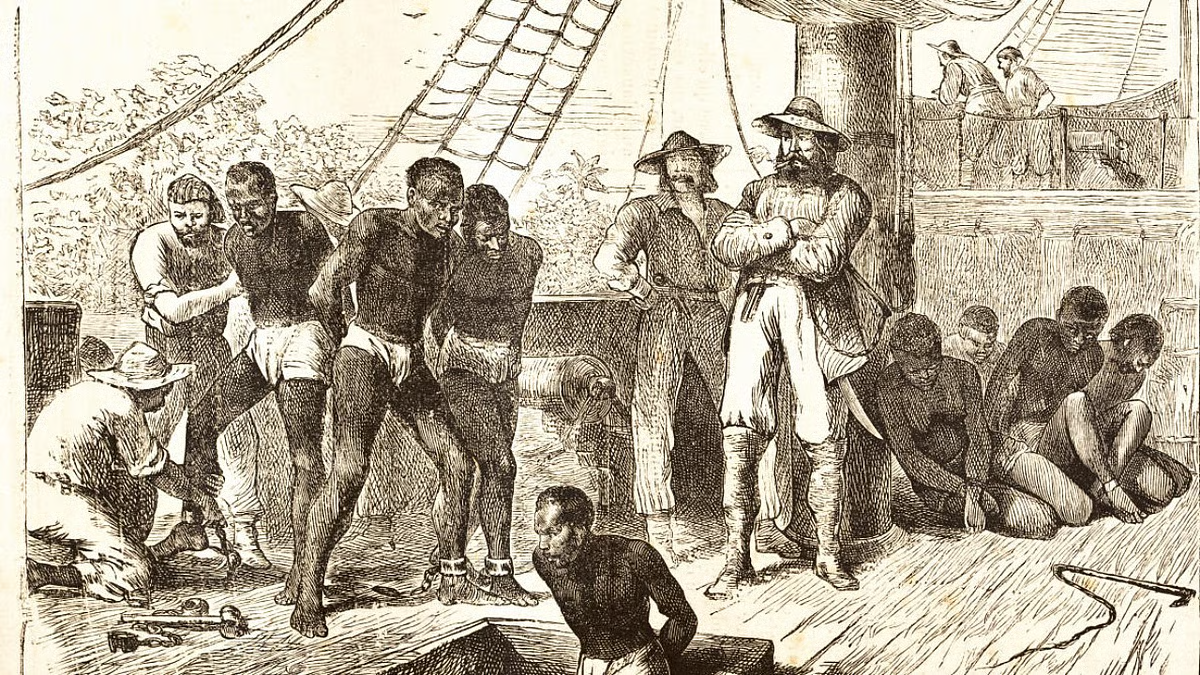
The Rise of Slavery in the 16th and 17th Centuries
During the 16th and 17th centuries, slavery entered a new and harsher stage. It was a time when many European countries were exploring new lands and looking for ways to make money. The Portuguese were the first people to transport enslaved Africans across the Atlantic. In 1526, they began terrible journey overseas, which would become known as the transatlantic slave trade. One of the most significant events in the history of slavery in North America happened on August 20, 1619. On this day, a ship called the "White Lion" arrived in the English colony of Virginia. This ship carried about 20 enslaved Africans who had been taken from a Portuguese ship. The "White Lion" was not the first ship to bring enslaved people to America, but it marked as a turning point because it was the first European enslaved ship to reach Virginia. As time went on, slavery gained popularity among English men, especially in the southern colonies. They saw enslaved Africans as a way to make their plantations more profitable. The demand for tobacco, rice, and other cash crops increased, and landowners wanted to have a steady supply of cheap labor. This led to a growing number of enslaved Africans being brought to America. By the late 1600s, slavery was becoming a crucial part of the economy in the southern colonies. The enslaved people were forced to work long hours under terrible conditions. They had no rights, and their lives were controlled by their owners. Many enslaved people tried to resist their situation, but it was very difficult. Some ran away, while others tried to fight back, but the system was designed to keep them in bondage. During this time, many laws were created to protect the interests of slave owners. These laws made it harder for enslaved people to escape and made it legal for owners to punish them severely. One famous quote from this period is, "Slavery is the state of being a slave, and the slave is a person who is the property of another."
Why Enslave Africans?
The enslavement of Africans by the English and other Europeans during the transatlantic slave trade was driven by economic, social, and political factors. From the 16th to 19th centuries, European nations expanded their empires and sought new labor sources for their growing economies, especially in the Americas. The demand for labor-intensive crops like sugar, tobacco, and cotton created a significant need for workers. Indigenous populations in the Americas were decimated by disease and conflict, prompting Europeans to turn to Africa. Africans were forcibly taken from their homelands through a brutal capture and trade system, often involving local leaders who exchanged their own people for goods. This dehumanizing practice was justified by beliefs in racial superiority, viewing Africans as inferior and fit for enslavement. The slave trade was further supported by European laws that devalued African lives and promoted slavery as essential for economic growth. Consequently, millions of Africans were transported across the Atlantic in inhumane conditions, enduring immense suffering. The legacy of this enslavement has lasting impacts on societies worldwide, contributing to systemic racism and inequality that persist today. Understanding this dark chapter's historical context is crucial for acknowledging its effects and striving for a more equitable future.

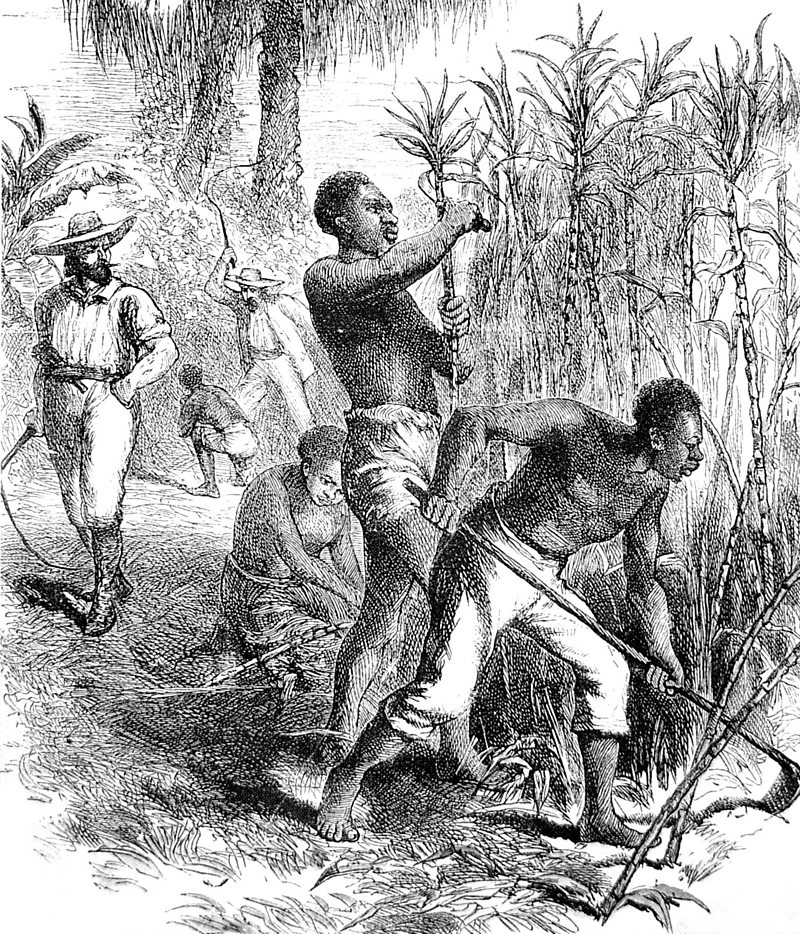
Slavery in the 18th Century
Slavery in the 18th century was a troubling part of history, particularly in the Americas and the Caribbean. European countries like Britain, France, and Spain expanded their colonies and needed workers for crops such as sugar, tobacco, and cotton. This led to the forced transportation of millions of Africans to the New World. The Atlantic Slave Trade, which started in the early 16th century, grew dramatically during the 18th century. By 1800, around 12 million Africans were taken from their homes and shipped across the Atlantic. Many were brought to Caribbean plantations, facing brutal conditions. The profitable sugar trade drove the demand for enslaved labor. In 1739, the Stono Rebellion in South Carolina saw enslaved Africans fight for freedom, but it was harshly suppressed, highlighting tensions between enslaved people and their owners. Slavery was also prevalent in the American colonies, especially in the southern regions, where plantations flourished. By the mid-1700s, enslaved individuals made up a significant portion of the population; for instance, in Virginia by 1750, about 40% were enslaved Africans. Throughout this period, enslaved people resisted their conditions through work slowdowns, escape attempts, and revolts. Some escaped to freedom, while others maintained their culture despite the harsh realities. The 18th century also saw the emergence of abolitionist movements advocating for the rights of enslaved people. The American Revolution began in 1776, emphasizing liberty and freedom, yet the contradiction of fighting for freedom while allowing slavery persisted. Some enslaved individuals fought for the British, hoping for freedom, while others sided with American colonists. This complex relationship between slavery and the quest for independence would continue to shape American society. Overall, the 18th century was pivotal for slavery, marked by significant events, resistance, and the beginnings of abolition. The legacy of this period has lasting effects on society and remains a vital part of history that we must understand and remember.
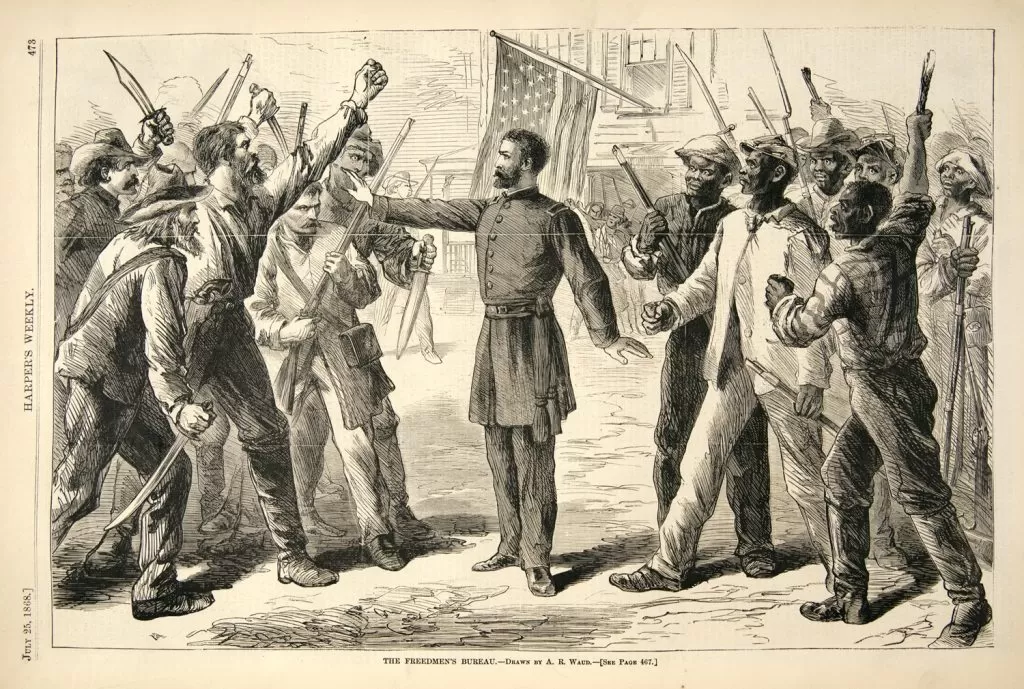
How was Slavery During the Civil War
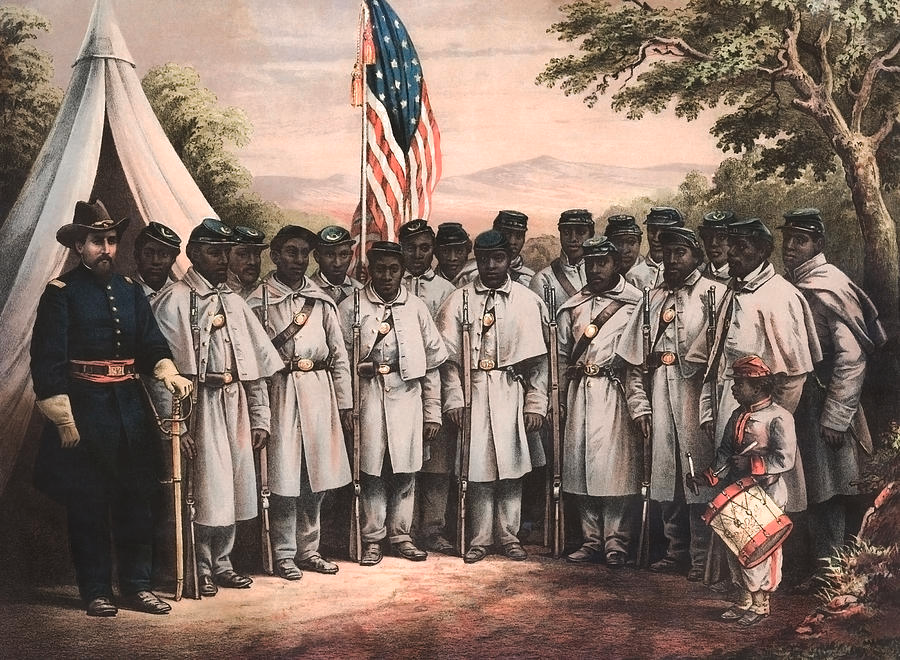
Slavery was a major issue that led to the American Civil War, which lasted from 1861 to 1865. The Southern states depended on slavery for their economy, especially in agriculture. They grew crops like cotton and tobacco, which required a lot of labor. In contrast, the Northern states were moving towards industry and had already started to abolish slavery. This difference created a lot of tension between the North and the South. One key event was the Missouri Compromise of 1820, which tried to balance the number of slave and free states. It allowed Missouri to enter as a slave state and Maine as a free state. However, this was just a temporary solution. Later, the Compromise of 1850 tried to address the issue again but only made things worse. The Kansas-Nebraska Act of 1854 allowed new territories to decide for themselves whether to allow slavery, leading to violent conflicts known as "Bleeding Kansas." In 1860, Abraham Lincoln was elected president. He was against the expansion of slavery into new territories. This angered many Southern states, and they began to secede from the Union. By April 1861, the Civil War officially began with the attack on Fort Sumter in South Carolina. As the war progressed, the issue of slavery became central to the conflict. On January 1, 1863, Lincoln issued the Emancipation Proclamation, which declared that all slaves in the Confederate states were free. This was a turning point in the war, as it changed the focus from just preserving the Union to also fighting for freedom. It also allowed African Americans to join the Union Army, which they did in large numbers. The war continued until April 9, 1865, when General Robert E. Lee surrendered to General Ulysses S. Grant at Appomattox Court House, effectively ending the Civil War. The 13th Amendment was passed later that year, officially abolishing slavery in the United States. This was a significant victory for those who had fought against slavery and a crucial step towards civil rights for all Americans. In conclusion, slavery was a central issue during the Civil War, influencing many events and decisions.
The End of Slavery: A Turning Point in American History
Slavery in the United States came to a decisive end with the conclusion of the Civil War in 1865. This brutal conflict, fought between the Northern states (the Union) and the Southern states (the Confederacy), was primarily rooted in the contentious issues surrounding slavery and states' rights. As the war progressed, it became increasingly clear that the fight was not only for the preservation of the Union but also for the emancipation of enslaved people. The turning point came with the issuance of the Emancipation Proclamation by President Abraham Lincoln in 1863, which declared that all enslaved individuals in the Confederate states were to be freed. Although the Proclamation did not immediately free all enslaved people, it shifted the war's focus toward the abolition of slavery. The Union's victory in April 1865 effectively dismantled the Confederacy and led to the passage of the Thirteenth Amendment in December of that year, which formally abolished slavery throughout the United States. This marked a significant milestone in American history, paving the way for the ongoing struggle for civil rights and equality that would follow in the years to come.

Summary of Slavery in Ancient Civilizations and Beyond
Slavery has existed in various forms throughout history, significantly impacting societies in ancient Rome, Greece, Egypt, Sumer, and China, as well as during the 16th to 18th centuries. In ancient Rome, slaves were often war prisoners, born into slavery, or sold due to debt, fulfilling roles from household servants to laborers in mines and fields. Slavery was vital to the Roman economy and social structure, with no legal rights for slaves. In ancient Greece, particularly in city-states like Athens, slavery was also common. Slaves were used for domestic work, agriculture, and skilled labor. Unlike in Rome, some Greek slaves could earn freedom, but many-faced harsh conditions and were seen as property. Egypt had a complex slavery system, with slaves often captives from military conquests or indentured servants. They worked on large projects, including pyramids, and sometimes owned property or married free citizens, though they remained largely subjugated. In Sumer, one of the earliest civilizations, slavery was present, with records showing slaves in agriculture and household duties. Sumerian laws recognized slavery, and slaves could be acquired through war, debt, or birth, with varying treatment and some rights. China also had a long history of slavery, especially during the Shang and Zhou dynasties, where slaves were often war captives or criminals, serving in households or as laborers. Confucian ideology later emphasized hierarchy and social order, accepting slavery. From the 16th to 18th centuries, slavery evolved, particularly with the transatlantic slave trade, where European powers forcibly transported millions of Africans to the Americas for plantation work. This period marked a significant escalation in the brutality of slavery, with enslaved individuals facing horrendous conditions during transport and in their new environments. The legacy of this era continues to influence societies today, highlighting the lasting effects of slavery throughout history.